

The LLM Boom: Securing the Future of AI

Understanding the Growth and Importance of LLM Security
The global market for Large Language Models (LLMs) is projected to grow from $6.4 billion in 2024 to $36 billion by 2030, reflecting a compound annual growth rate (CAGR) of 33 percent. As AI adoption accelerates, security challenges associated with these models are becoming increasingly critical. Businesses and professionals must address these risks to ensure the safe and ethical deployment of AI applications.
Why LLM Security Matters
Exponential Growth of LLMs
The rapid expansion of the LLM market highlights the increasing reliance of businesses on AI-powered solutions. However, with widespread adoption comes an increased exposure to security vulnerabilities.
Protection of Sensitive Data
Organizations dealing with customer data, financial transactions, and intellectual property must prioritize LLM security to prevent breaches and ensure compliance with data protection regulations.
Business and Reputation Risks
Security loopholes, biases, and AI misuse can result in reputational damage, legal consequences, and financial losses. Ensuring robust security measures is crucial to maintaining consumer trust and industry credibility.
Regulatory Compliance
Industries such as healthcare, finance, and law are subject to strict regulations like GDPR, HIPAA, and other legal frameworks. AI models must be designed to comply with these regulations to avoid legal repercussions.

Hidden Threats That Can Compromise AI Applications
Data Leakage and Privacy Violations
AI models trained on sensitive datasets can inadvertently expose confidential information. Without proper safeguards, organizations risk breaching user privacy.
Prompt Injection Attacks
Malicious actors can manipulate AI prompts to extract unauthorized information or generate harmful content. This type of attack can lead to data leaks, misinformation, or AI-generated harmful outputs.
Bias and Misinformation
If AI models are not properly trained and monitored, they may perpetuate biases or generate factually incorrect information, leading to ethical and reputational concerns.
Model Manipulation and Adversarial Attacks
Attackers can manipulate training data, deceive AI models, or introduce adversarial inputs that alter model behavior for malicious purposes.
Unauthorized Model Access
Hackers can exploit vulnerabilities to steal AI models, resulting in intellectual property theft and security breaches. Securing model access is critical to preventing unauthorized use.
Major Security Risks in AI Applications
LLM security threats can be categorized into three main areas:
Data and Privacy Risks
Unauthorized data retention
Adversarial attacks
Lack of encryption
Data leakage and breaches
Compliance and regulatory violations
Model Vulnerabilities
Malicious fine-tuning
Data poisoning
Misuse of open-source models
Model inversion attacks
Model theft and cloning
User and Compliance Issues
Deepfake generation
AI-powered phishing
Lack of explainability and auditing
Ethical misuse of AI
Security misconfigurations
Strategies to Mitigate Risks and Safeguard LLMs
Implement Data Encryption and Access Controls
Restricting access to sensitive data through encryption and strict access controls can significantly reduce the risk of unauthorized data breaches.
Regularly Audit and Test AI Models
Conducting regular security audits, penetration testing, and vulnerability assessments ensures that AI models are resilient against attacks.
Use Adversarial Training and Bias Detection
Adversarial training can enhance model robustness against attacks, while bias detection mechanisms help prevent AI models from propagating harmful biases.
Apply AI Ethics and Compliance Guidelines
Ensuring that AI systems adhere to ethical and regulatory frameworks can mitigate legal risks and promote responsible AI deployment.
Monitor AI Usage with User Authentication
Tracking user interactions and implementing authentication measures can help prevent unauthorized access and misuse of AI systems.
Conclusion
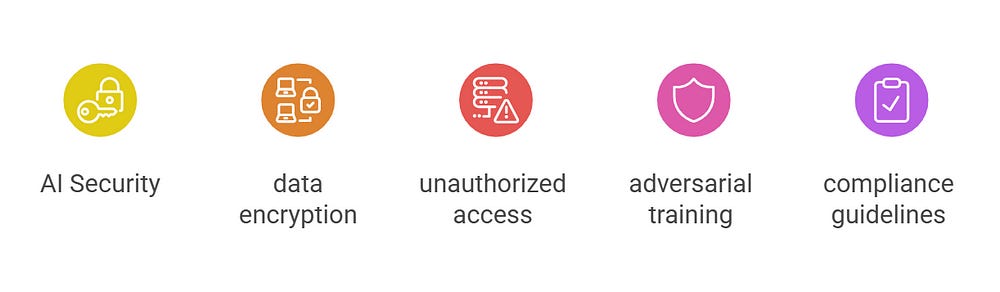
The rise of LLMs presents immense opportunities, but it also introduces new security challenges that must be addressed. Organizations and AI practitioners must adopt proactive security measures to safeguard AI applications from threats. By implementing encryption, conducting audits, using adversarial training, adhering to ethical guidelines, and monitoring AI usage, businesses can ensure the secure and responsible deployment of LLMs in an increasingly AI-driven world.

An exclusive program training 30 top candidates in AI development, security, and deployment. Apply here to take the assessment.
Apply now and take the first step toward becoming a GenAI leader.
Here is the link : https://www.hidevs.xyz/genai-super30